Blog
Custom event printing: faster impact for event success

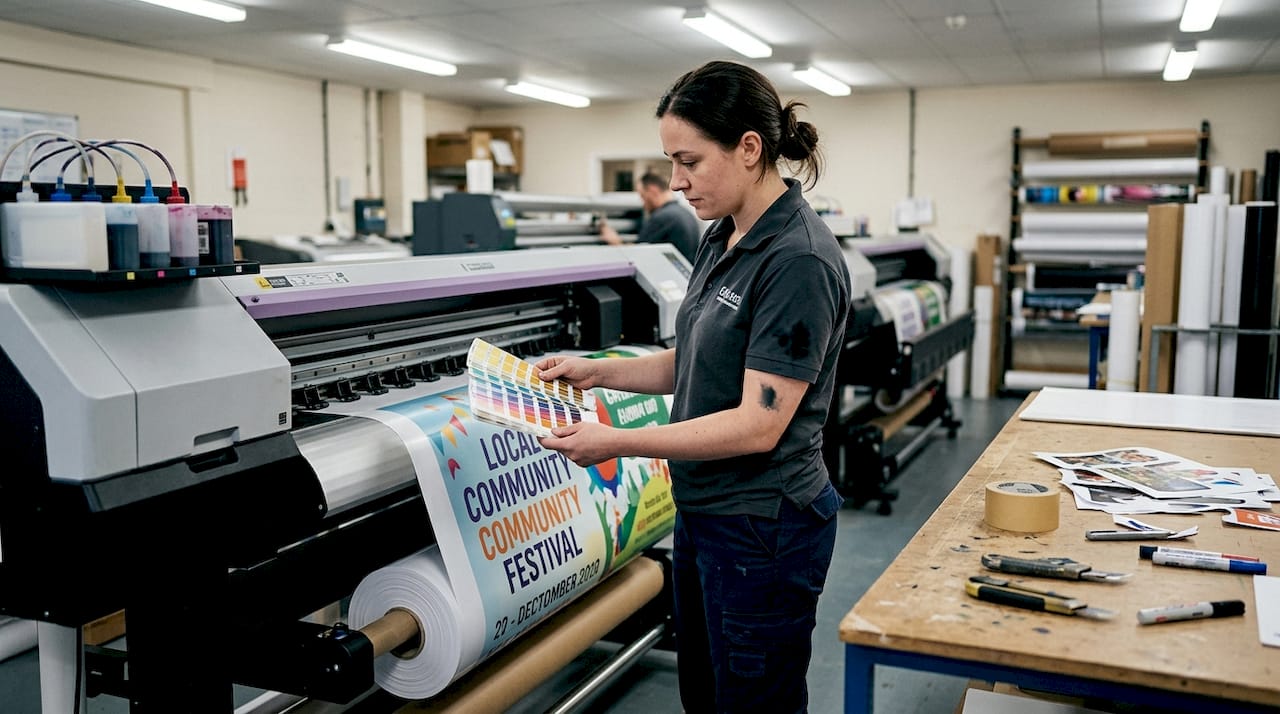
Organizations running dozens of events each year know that generic, slow-to-arrive print materials can kill momentum before a show even starts. The old model, where you placed a bulk order weeks in advance and hoped for the best, simply does not work anymore. Event teams today manage tight timelines, last-minute venue changes, and complex multi-location activations that demand speed, precision, and real personalization. This guide breaks down everything you need to know about custom event printing, from choosing the right materials and understanding the production workflow to measuring ROI and going greener without sacrificing quality or speed.
Table of Contents
- What is custom event printing?
- Comparing print materials: Fabric, vinyl, and more
- How the custom event printing process works
- ROI and effectiveness: Measuring the impact of event prints
- Sustainability in custom event printing
- Rethinking event print: Why speed and flexibility now surpass tradition
- Bring your vision to life with next day custom event printing
- Frequently asked questions
Key Takeaways
| Point | Details |
|---|---|
| Speed and flexibility | Custom event printing allows rapid, last-minute changes and quick delivery for flawless events. |
| Right material matters | Choosing fabric, vinyl, or specialty substrates impacts print effectiveness, cost, and venue compliance. |
| Proven ROI | Custom prints boost attendee engagement, leads, and event footprint, with measurable returns. |
| Sustainable choices | Eco-friendly print options are increasingly available and attract conscious brands and sponsors. |
| One-stop solutions exist | Full-service providers streamline complex orders, multi-location shipping, and offer next-day turnaround. |
What is custom event printing?
Custom event printing is the short-run, highly personalized production of banners, signage, booth displays, table covers, and promotional materials built specifically for a single event or campaign. Unlike standard commercial printing, which favors long runs and uniform output, custom event printing prioritizes flexibility, fast turnaround, and brand accuracy. Every piece is tailored to your specific messaging, color palette, and format requirements.
The use cases are broad. Trade shows, pop-up activations, product launch tours, multi-location retail promotions, and corporate conferences all rely on custom print materials to create a cohesive, professional presence. A well-designed booth backdrop or a crisp fabric banner does more than look good. It signals credibility and draws foot traffic.
The scale of this industry is significant. The trade show industry represents a $101B economy, with organizations averaging 25 events per year and 412 registrations per event. That volume demands a print partner who can keep pace, not one that takes three weeks to ship a banner.
Here is what custom event printing typically covers:
- Large-format banners and backdrops
- Retractable banner stands and A-frame displays
- Table covers and throws
- Custom canopies and tents
- Step-and-repeat photo backdrops
- Booth kits and complete trade show packages
Well-executed on-demand printing services give event teams the ability to order exactly what they need, when they need it, without minimum quantities or long lead times. Browsing available event printing products before your next show is a smart first step in planning.
“The difference between a forgettable booth and a magnetic one is rarely the product. It’s the quality and intentionality of the surrounding print environment.”
Pro Tip: Lock in your brand guidelines, file formats, and approved color codes before you reach out to any printer. Artwork revisions are the single biggest cause of production delays.
Comparing print materials: Fabric, vinyl, and more
Knowing what custom event printing is, the next key decision is selecting the right material for your unique event need. The substrate you choose affects everything: portability, durability, print quality, setup time, and even whether your display passes venue safety inspections.
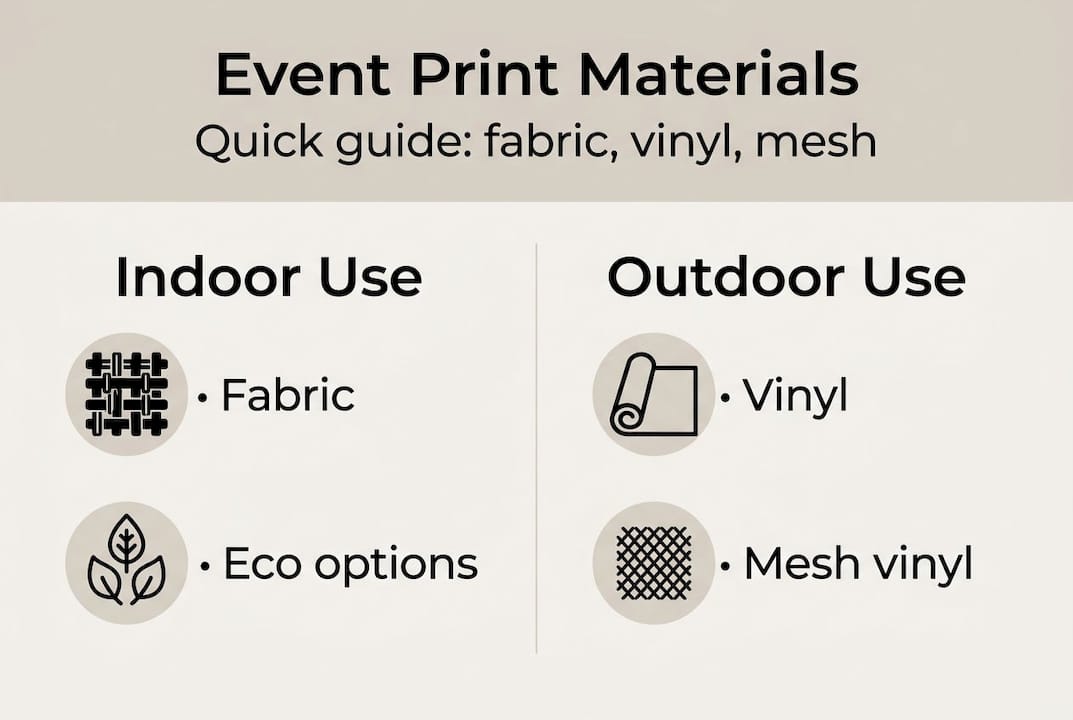
Fabric is the go-to for indoor events. It is lightweight, wrinkle-resistant (especially in newer weaves), and folds down small for easy transport. Fabric also photographs well under booth lighting, giving your brand a premium, finished look. On the sustainability side, fabric banner options made from recycled polyester are increasingly available and align with green event mandates.
Vinyl is the workhorse for outdoor and high-traffic environments. It handles wind, moisture, and direct sunlight without fading or tearing. Vinyl banner options in 18oz blockout weight deliver saturated, vivid color that holds up across multiple uses. The tradeoff is weight and bulk, which matters if your team travels frequently.
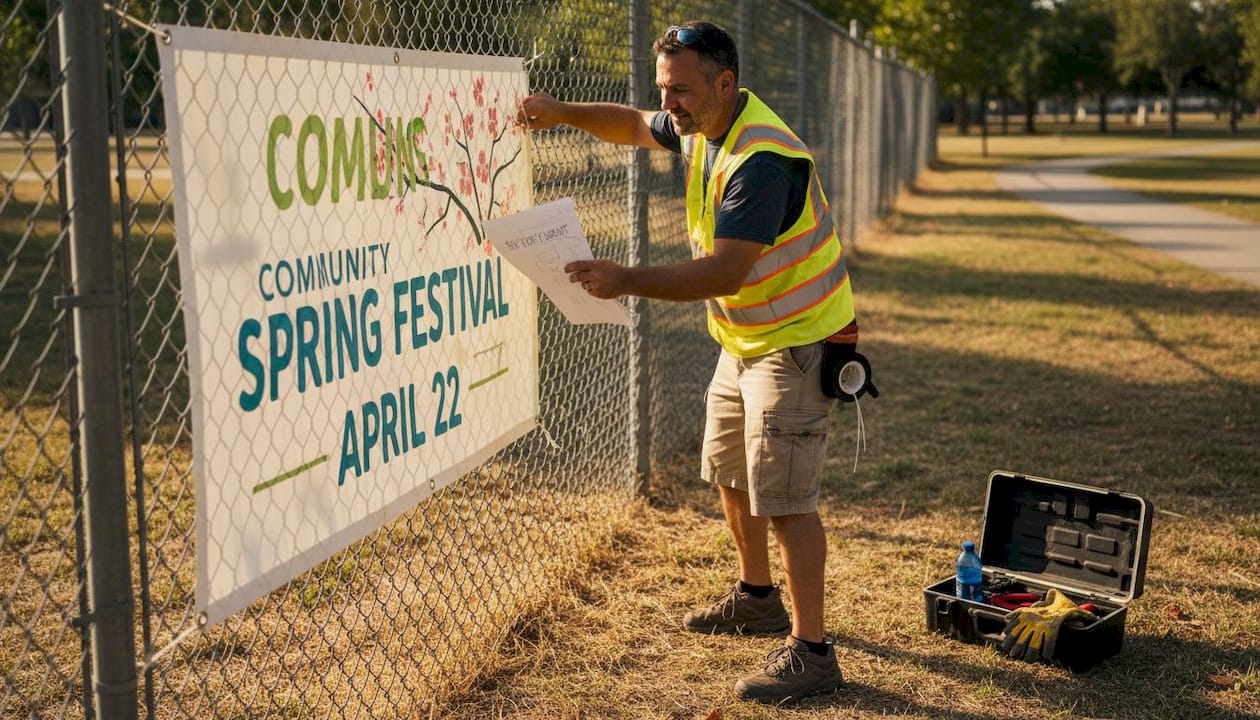
Mesh vinyl is a smart choice for outdoor fence lines or areas with high wind exposure. The perforations reduce wind load while still delivering a strong visual impression.
As printing technology evolves, the gap between fabric and vinyl print quality has narrowed significantly, with digital inkjet now producing sharp, color-accurate results on both substrates.
One compliance point worth knowing: indoor venues often require materials that meet NFPA 701 fire-retardant standards. Always confirm this with your venue before finalizing your material order.
| Material | Durability | Portability | Eco value | Best use case |
|---|---|---|---|---|
| Fabric (9.5oz) | Moderate | High | High | Indoor trade shows, conferences |
| Vinyl (18oz) | High | Moderate | Low | Outdoor events, street banners |
| Mesh vinyl | Moderate | Moderate | Low | Outdoor fences, high-wind areas |
| Recycled polyester | Moderate | High | Very high | Eco-focused indoor events |
Pro Tip: Match your material choice to both the venue’s physical conditions and its sustainability requirements. Many corporate event RFPs now include eco-criteria that can disqualify vendors using standard PVC vinyl.
How the custom event printing process works
Once you have chosen your materials, understanding the process from concept to installation can make your next event smoother and far less stressful. The workflow has more moving parts than most planners expect, but knowing each step helps you avoid costly surprises.
Here is the typical end-to-end flow:
- Artwork submission — Upload your print-ready files, usually in PDF or AI format at 150-300 DPI for large-format work.
- Proofing — A digital proof is generated for your approval. This is your last chance to catch errors before production begins.
- Production — Files go to press. For on-demand services, this can begin within hours of proof approval.
- Finishing — Hemming, grommets, pole pockets, or lamination are added based on your display type.
- Quality assurance — Finished pieces are inspected for color accuracy, registration, and structural integrity.
- Kitting and shipping — For multi-location events, pieces are sorted, labeled, and shipped to individual venues.
- Onsite or just-in-time delivery — Some services offer live printing at the venue for last-minute personalization.
The scale possible with modern print operations is striking. One documented case saw 6.9M pieces produced at a sustained rate of 580,000 per week under extreme deadline pressure. That kind of capacity matters when you are running a national tour or a multi-city product launch.
| Order type | Typical turnaround | Complexity level |
|---|---|---|
| Single banner, standard size | Same day to 24 hours | Low |
| Full booth kit (10×20) | 2-3 business days | Medium |
| Multi-location kitted shipment | 3-5 business days | High |
| Live onsite personalization | Real-time | Variable |
For large booth builds, exploring options like large custom booth projects or timely booth delivery early in your planning cycle gives you the most flexibility on timing and customization.
Pro Tip: If you run a multi-city tour or recurring activation, consolidate your print orders into a single kitted shipment per location. This reduces shipping costs, minimizes lost pieces, and makes onsite setup dramatically faster.
ROI and effectiveness: Measuring the impact of event prints
Beyond getting the perfect prints on time, here is how to measure their true effectiveness on your bottom line. Event print materials are not just decoration. They are conversion tools, and the data backs this up.
Custom banners and signage produce a 28-40% lift in dwell time and foot traffic at booths, with well-branded displays generating 22-35% more leads compared to generic setups. Those are not marginal gains. For a show where your team is spending $15,000 on booth space, a 30% increase in qualified conversations is a significant return on a few hundred dollars in print investment.
Here are the key metrics worth tracking:
- Leads captured at the booth (compare shows with strong vs. weak print setups)
- QR code scans from printed materials linked to landing pages or offer redemptions
- Dwell time measured by staff observation or footfall counters
- Impressions estimated from event attendance and booth location traffic data
- Cost per attendee interaction calculated by dividing total print spend by qualified conversations
Promotional products and printed materials consistently rank among the lowest cost-per-impression channels in marketing. Unlike digital ads that disappear when the budget runs out, a well-made banner or table cover keeps working across multiple events.
“78% of event marketers say in-person events are the single most impactful channel for driving business outcomes.”
To tie print directly to revenue, use unique promo codes printed on banners or handouts. When those codes are redeemed post-show, you have a direct attribution line from a physical print piece to a closed deal. It is simple, low-tech, and remarkably effective.
Sustainability in custom event printing
With effectiveness measured, many organizers now expect their customized prints to be as green as they are impactful. Sustainability is no longer a nice-to-have in event planning. It is increasingly a requirement in RFPs, sponsorship agreements, and corporate event policies.
The good news is that eco-friendly printing has improved dramatically. You no longer have to choose between going green and getting great results. Here are the most practical options available today:
- Recycled polyester fabric made from post-consumer plastic bottles, suitable for eco-friendly banners and backdrops
- Water-based inks that eliminate the harsh solvents used in traditional large-format printing
- Low-VOC (volatile organic compound) processes that reduce air quality impact during production
- Sustainable fabric prints in wrinkle-free weaves that travel well and last across many events
- Modular signage systems that allow you to swap printed panels without replacing the entire frame structure
Event marketing budgets are projected to grow by 40% through 2026, but that growth is paired with a sharper focus on efficiency and reusability. Buying fewer, better pieces that work across multiple events is smarter than ordering cheap materials that end up in a landfill after one use.
Modular systems are especially valuable for touring activations. You design the frame once, then update the printed panels for each city or campaign. Pairing this with efficient LED display lighting further reduces energy consumption at the booth level.
Pro Tip: Ask your print vendor for material certifications and VOC compliance documentation before placing an order. This information is often required for venue approval and can strengthen your sustainability reporting to stakeholders.
Rethinking event print: Why speed and flexibility now surpass tradition
Most guides focus on materials and timelines. Here is what they skip: the real disruption in event printing is not the technology. It is the expectation of agility.
The old model assumed you knew exactly what you needed six weeks out. You placed a bulk order, locked in the design, and shipped everything to a warehouse. That worked when events were predictable and brands were static. Neither is true anymore.
Today, a keynote speaker cancels 48 hours before the show. A product launch gets delayed and the messaging needs to change. A sponsor upgrades their tier and wants their logo on your backdrop. These are not edge cases. They happen at nearly every major event.
Bulk printing with long lead times cannot accommodate that reality. Same-day print agility is not a premium feature anymore. It is the baseline expectation for any serious event team. The planners who build their print strategy around flexibility, using on-demand vendors, modular designs, and fast-turnaround partners, consistently outperform those who commit everything to a single bulk run weeks in advance. Speed and customization are not in tension. The right partner delivers both.
Bring your vision to life with next day custom event printing
If you are convinced that agility is the difference-maker for event printing, here is where to find the speed and quality your next event deserves.
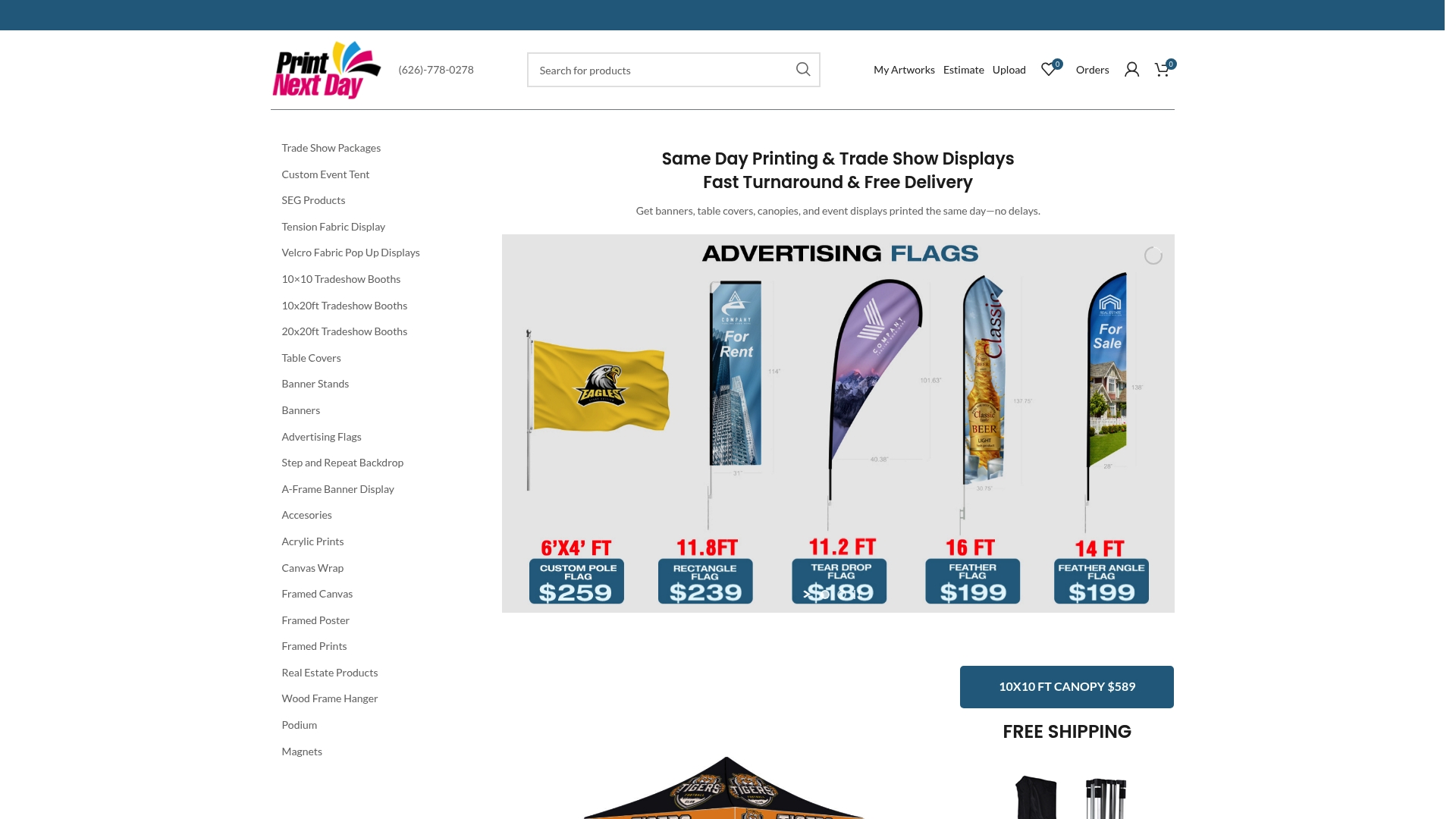
Print Next Day specializes in fast event printing with same-day and next-day turnaround on banners, booth kits, backdrops, and more. Whether you need premium fabric banners for a high-end conference or A-frame displays for a pop-up activation, the full range of materials, sizes, and finishing options is ready to ship fast. Free shipping and expedited processing mean your materials arrive on time, every time. Stop settling for slow and start printing with a partner built for the pace of modern events.
Frequently asked questions
What types of materials are best for indoor versus outdoor event prints?
Fabric is ideal for indoor displays due to its portability and eco-friendly profile, while vinyl excels outdoors for its durability and vivid, weather-resistant color.
How quickly can custom event prints be produced and delivered?
Fast-turnaround services can produce and deliver within 24-72 hours, with documented operations sustaining 580k weekly capacity even for complex multi-location shipments.
How do you measure the success of printed event materials?
Track leads captured, QR code scans, dwell time, and foot traffic. Custom banners drive a 28-40% lift in booth traffic, making these metrics straightforward to benchmark across shows.
What are sustainable options in custom event printing?
Recycled polyester fabrics, water-based inks, and low-VOC production methods are the most widely available eco-friendly choices for event organizers today.